Every A-frame listing claims to be cozy. Most are. What matters is what else the place does — because cozy alone is not a weekend.
Search "A-frame cabin near Denver" on any platform and you'll get dozens of results. Many are beautiful. A few are famous. The Front Range has a lot of A-frames — more than most people realize — and they have a surprisingly long history out here. Some thoughts on why the form caught on in this part of Colorado, and what we think makes one actually worth the drive.
Why the A-frame became a Colorado thing
The A-frame had its national moment in the late 1950s and 60s. Post-war Americans were buying cars, taking road trips, and suddenly able to own a second home without being rich. The A-frame was the right shape at the right time: cheap to build, easy to assemble in a weekend with a few friends, and photogenic in a way that a rectangular cabin never was.
Colorado's foothills turned out to be the ideal terrain for the form. The steep pitch of the A-frame roof sheds snow — crucial at 7,000+ feet. The small footprint worked on the tight, sloped lots that mountain land usually offered. And the tall front windows were basically designed for views like ours. If you drive Highway 285 between Morrison and Bailey, you'll see dozens of original A-frames still tucked into the hills, most built between 1962 and 1978.
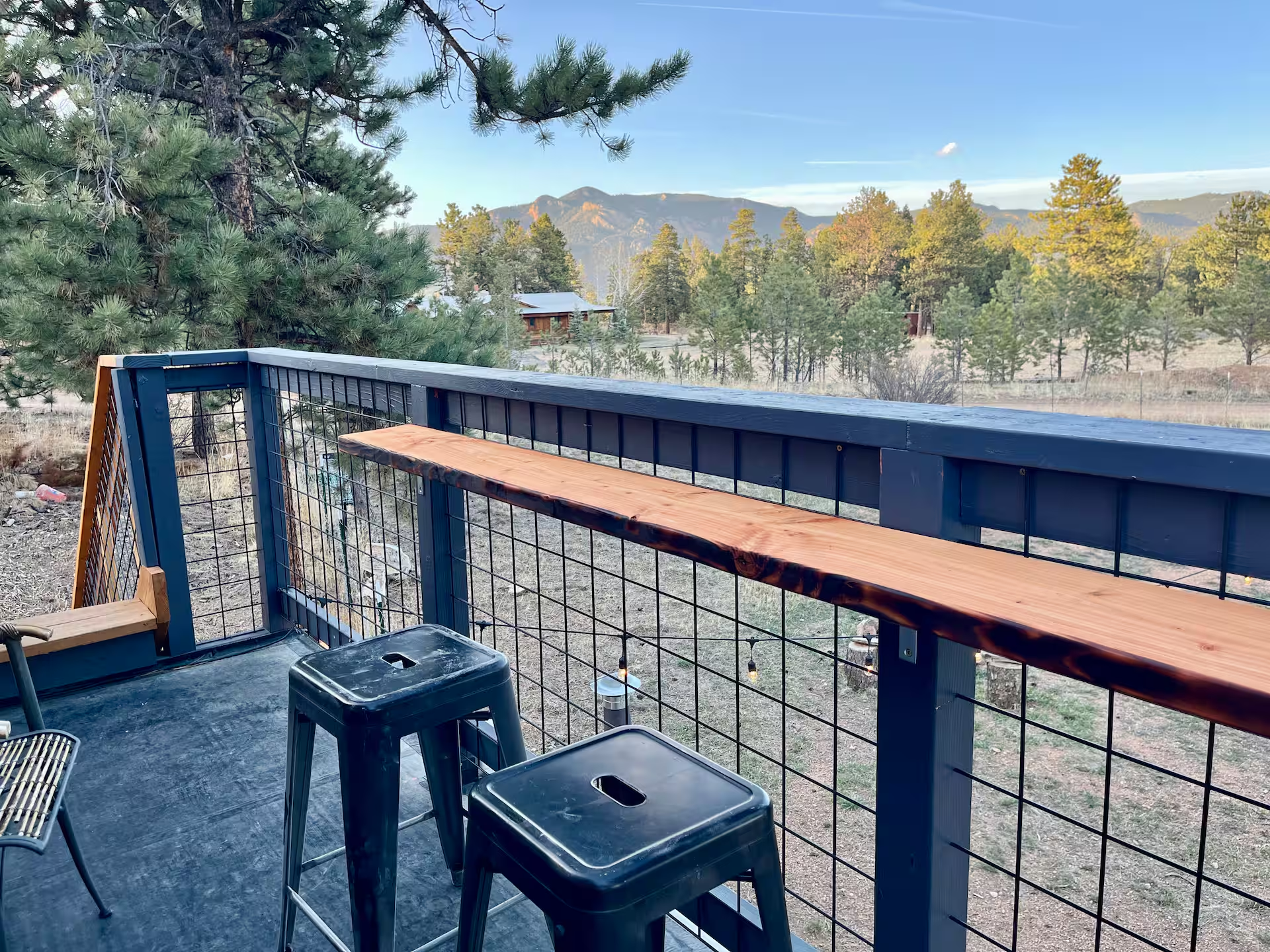
Ours is one of them. We bought and remodeled it because the bones of an A-frame are worth preserving — and because there's nothing quite like stepping out onto the balcony with a mug of coffee and seeing Black Mountain looking back at you.
What separates a good A-frame stay from a generic one
A real view from the balcony
The whole point of an A-frame is that tall front profile — and ours opens onto a balcony that faces directly at Black Mountain and the northern edge of Staunton State Park. First coffee, last drink of the night — both happen out there, watching the ridge change color.
The layout actually works
A-frames are notoriously tricky inside. The walls slope. The square footage lies. A bad A-frame remodel fights the shape; a good one uses it. Our loft nestles into the apex where the ceiling pitches lowest, keeping the main floor open and full-height. It's the difference between a cabin that feels small and one that feels like a treehouse.
Things to do, not just photograph
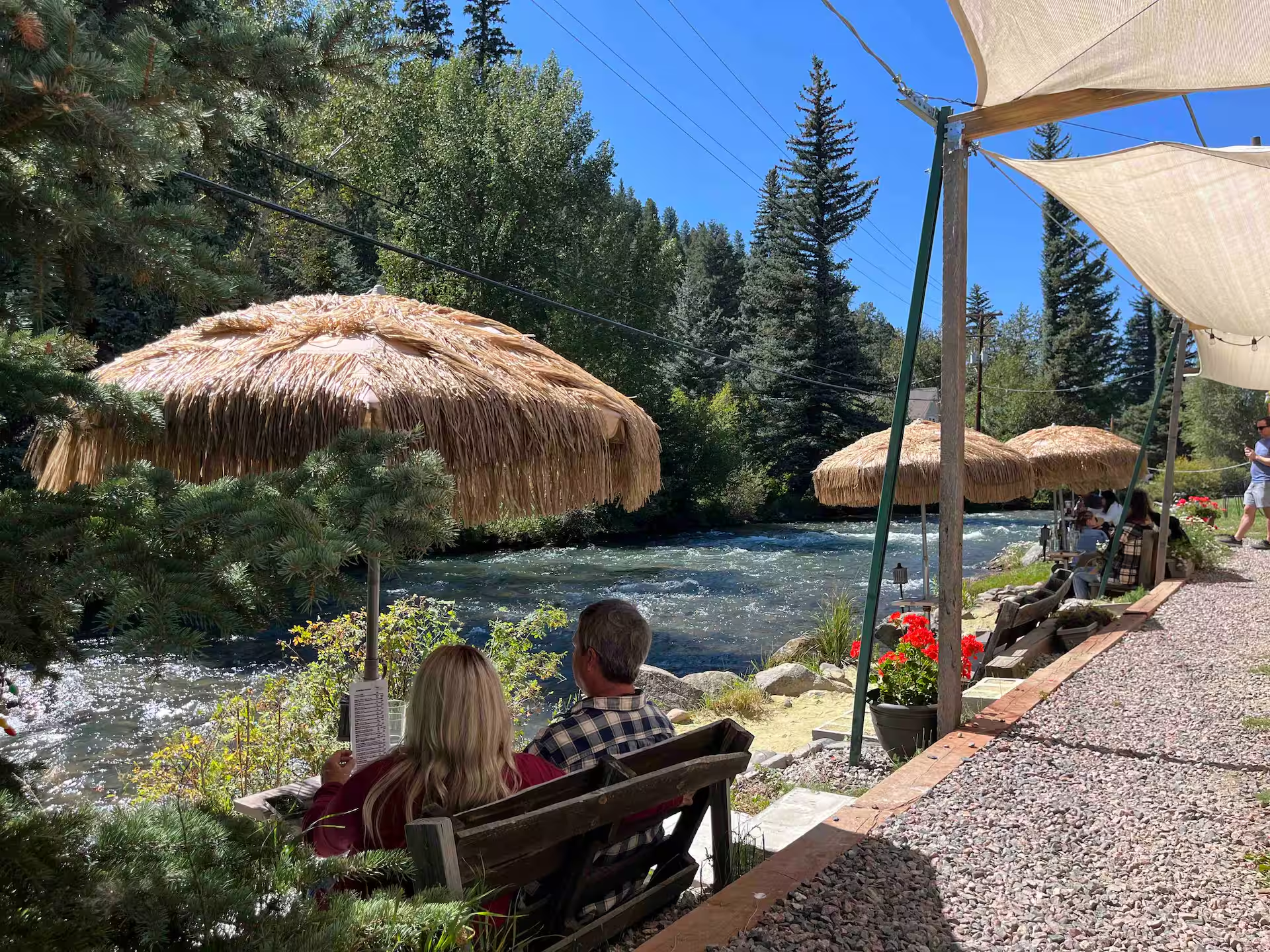
A cabin that's only pretty is a weekend of naps — which, fine. But the most-returned-to stays are ones with reasons to stay put. Ours has a hot tub, a greenhouse for chilly mornings, disc golf baskets set up on the property, and a shed stocked with snowshoes and fishing poles for guests to borrow. Outside the door, there are serious disc golf courses within fifteen minutes and some of the best hiking in the state within ten.
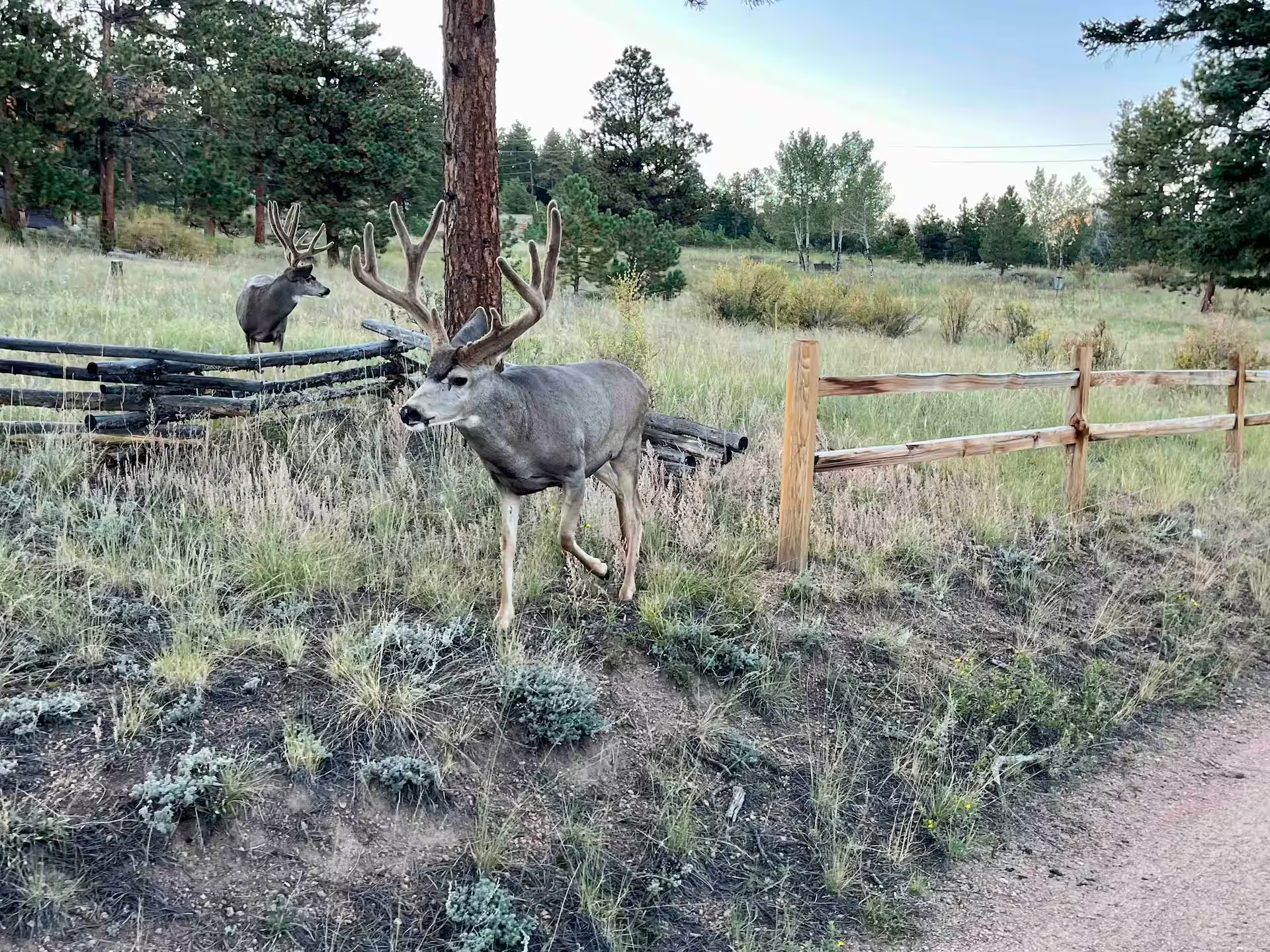
"The perfect little cabin for a little getaway. We absolutely loved our stay here. Beautiful building inside and out. And in a perfect location. Just far enough away that you get peace and quiet but close enough for a short drive to many attractions in the area. Every morning we were greeted with a few deer that walk right up to the window. It was spectacular, we can't recommend it enough!"
"Near Denver" is a spectrum.
When a listing says "30 minutes from Denver," check the map. Thirty minutes east is suburban strip malls. Thirty minutes west is… still Denver metro in most cases. The sweet spot for a real mountain-cabin feeling without a long drive is roughly 40 to 60 minutes west on Highway 285 — Conifer, Pine, Bailey, and the pockets in between. That's where you get:
- Full forest immersion. Pines, aspens, wildlife.
- Real elevation. 7,000+ feet, which changes the air and the stars.
- Quick access back to the metro. Under an hour to DIA, 30 minutes to Red Rocks, 45 to downtown.
- No mountain-pass driving. 285 stays open and plowed year-round.
Pine specifically sits about 45 minutes from downtown Denver and 30 from Red Rocks. It's one of the closer mountain towns where "mountain" still means mountain — not hilly suburb.
A unique A-frame cabin near Denver.
Remodeled original. Private hot tub. Mountain views, disc golf on site, and snowshoes in the shed. The whole foothills experience, thirty minutes from Red Rocks and forty-five from the city.
Check Availability →A short checklist before you book any A-frame
- Zoom in on the map. Are you in forest, or in a subdivision with aspirational landscaping?
- Look at the view photos from the deck or balcony. If there aren't any, that's the answer.
- Check elevation. Anything under 6,500 feet is foothills-adjacent, not foothills.
- Ask about amenities beyond the hot tub. Is there a greenhouse, gear to borrow, outdoor space that gets used?
- Read the worst reviews, not the best. Three-star reviews are where the truth lives.
The short version
There are a lot of A-frames in these hills. A few are great. The checklist above does most of the work — and the drive from Denver is short enough that booking two nights isn't a commitment.
Common questions
How far is Pine, Colorado from Denver?
Pine is about 45 minutes from downtown Denver via Highway 285 — close enough for a weekend, far enough to feel like real mountains.
What is an A-frame cabin?
An A-frame is a triangular cabin with steeply pitched roofs that reach almost to the ground, popular from the 1950s onward. The pitch sheds snow well, and the tall front windows are built for mountain views.
Are there A-frame cabins for rent near Denver?
Yes — Highway 285 between Morrison and Bailey has dozens of original A-frames from the 1960s and 70s, plenty of which rent as vacation properties.
What should I look for in an A-frame vacation rental?
Check the map first — are you in real forest or a hilly subdivision? Then look for a deck view in the photos, a layout that makes sense inside, and three-star reviews that tell you what's actually annoying about the place.
Written from our cabin in Pine, Colorado — about 30 minutes from Red Rocks and 45 minutes from Denver.